
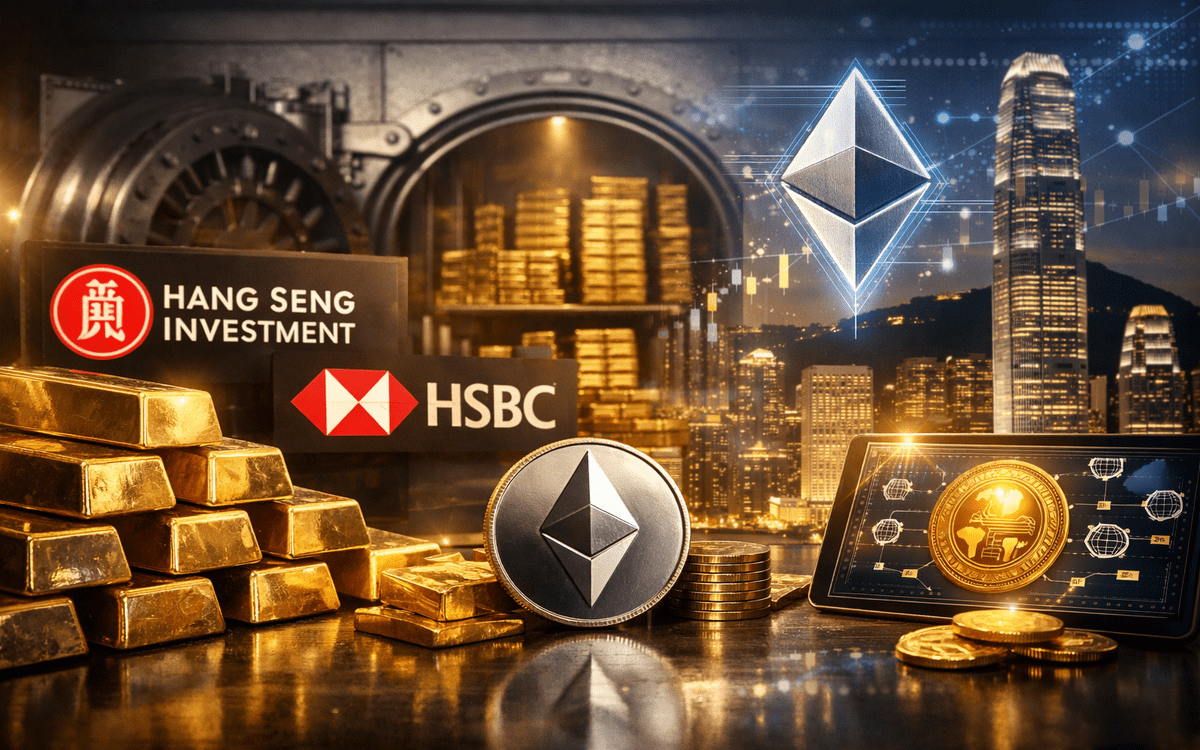
Hang Seng Investment has expanded Hong Kong’s exchange-traded fund (ETF) market with a product that blends traditional gold exposure and blockchain infrastructure.
The launch highlights growing efforts to connect established financial instruments with digital settlement systems.
Market activity shows early investor interest amid strong momentum in precious metals.
The Hang Seng gold ETF has tokenized shares issued on the Ethereum
Hang Seng Investment confirmed that its physically backed gold ETF began trading on Thursday on the Hong Kong Stock Exchange under ticker 03170.
Early Asian trading saw the fund rise by about 9%, according to exchange data. The firm said the product tracks the LBMA Gold Price AM and holds physical bullion in designated vaults located in Hong Kong.
Product disclosures show that the fund closely follows the LBMA Gold Price AM while maintaining direct ownership of stored gold.
The structure mirrors conventional gold ETFs but adds blockchain-based settlement features.
Hang Seng said the ETF includes tokenized share classes initially issued on the Ethereum blockchain. The prospectus noted that future expansion to other public blockchains remains possible.
HSBC acts as the tokenization agent, according to official materials. The bank supports issuance, record-keeping, and settlement for the digital units.
However, Hang Seng clarified that the tokenized shares do not trade freely. Investors may only subscribe to or redeem them through approved distributors.
The firm added that the tokenized units are not yet available, pending full regulatory approvals.
Despite using a public blockchain, the ETF restricts secondary market trading. Hang Seng explained that the design prioritizes compliance and investor protection.
Physical gold backing remains central to the product’s value, independent of its digital format. Storage in Hong Kong vaults allows transparent auditing and institutional-grade custody.
Hong Kong pushes regulated blockchain finance
The launch aligns with Hong Kong’s strategy to position itself as a regulated digital asset hub. Authorities have encouraged projects that connect traditional finance with blockchain systems uunder defined rules.
The Hong Kong Monetary Authority launched a pilot program in November to test real-value transactions using tokenized deposits.
Officials said the initiative showed how digital infrastructure could support regulated financial activity.
This advancement by Hang Seng reflects a growing trend toward integrating traditional investments with emerging technologies.
Hang Seng’s gold ETF follows a similar model by combining physical assets with blockchain rails.
The timing also coincides with gold prices reaching record levels near $5,600 per ounce on Thursday.
The strong gold performance could support demand for new gold investment vehicles. Hang Seng has not shared a timeline for opening subscriptions to tokenized units.
The uptake may influence whether other asset managers pursue similar tokenized fund structures.